
Grand Canyon 2023
Grand Canyon Backpacking and Camping
Bright Angel & North Kaibab: A Winter Descent & a Spring Return
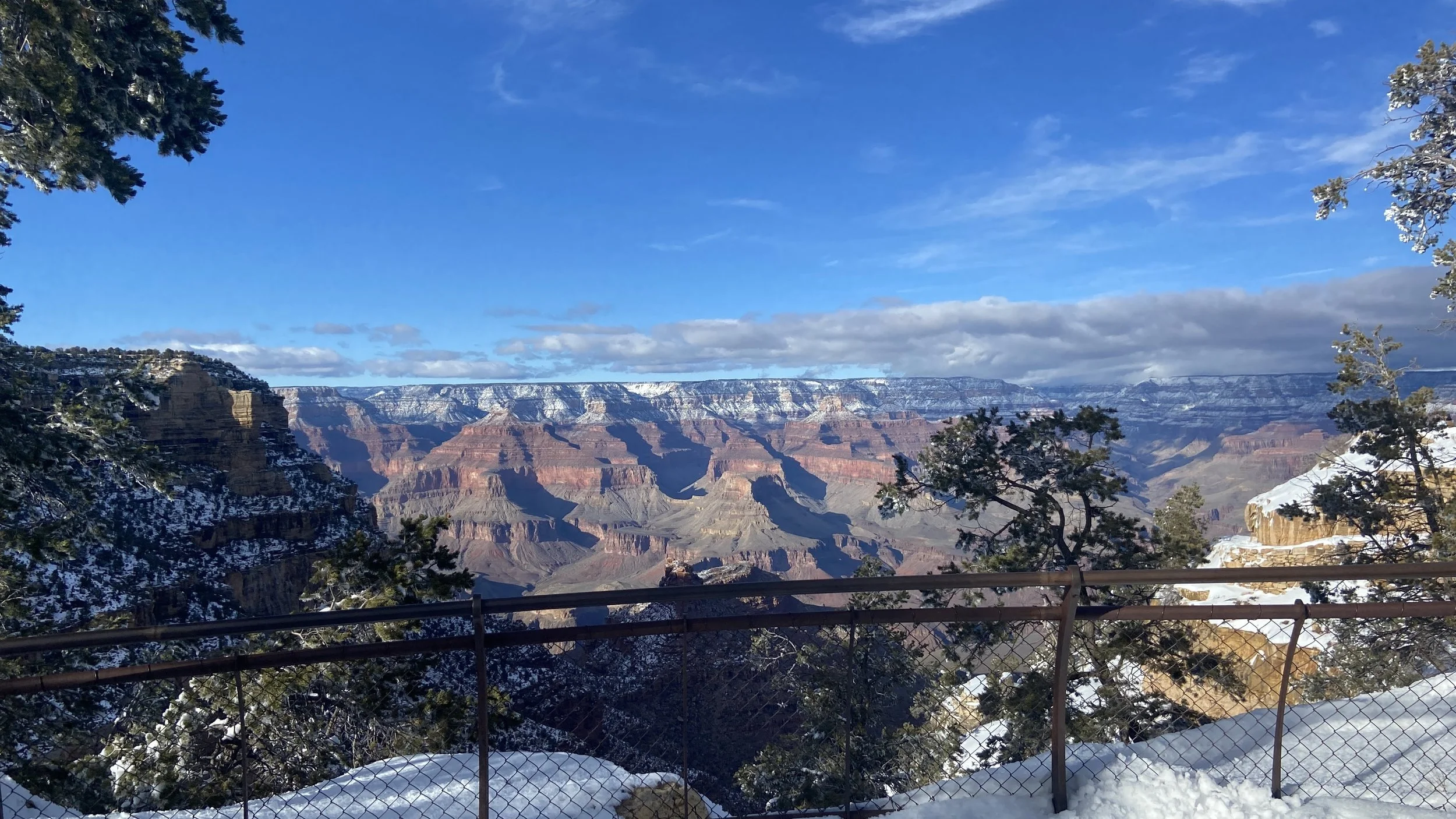
The rim that March morning in 2023 was white and quiet. Snow lay thick on the trails and in the scrub, and despite the bright sun, the park felt like it had been dusted with another world. That winter at Grand Canyon National Park was historic, one of the snowiest seasons on record, and the rim conditions reflected it. We clipped on our microspikes, tightened packs, and stepped off onto the Bright Angel Trail while tourists in sneakers and sun hats skittered and slid around us. Where others hesitated, our spikes held firm. The difference in traction felt like a small blessing: a practical gift that let us move confidently into the canyon’s vastness.
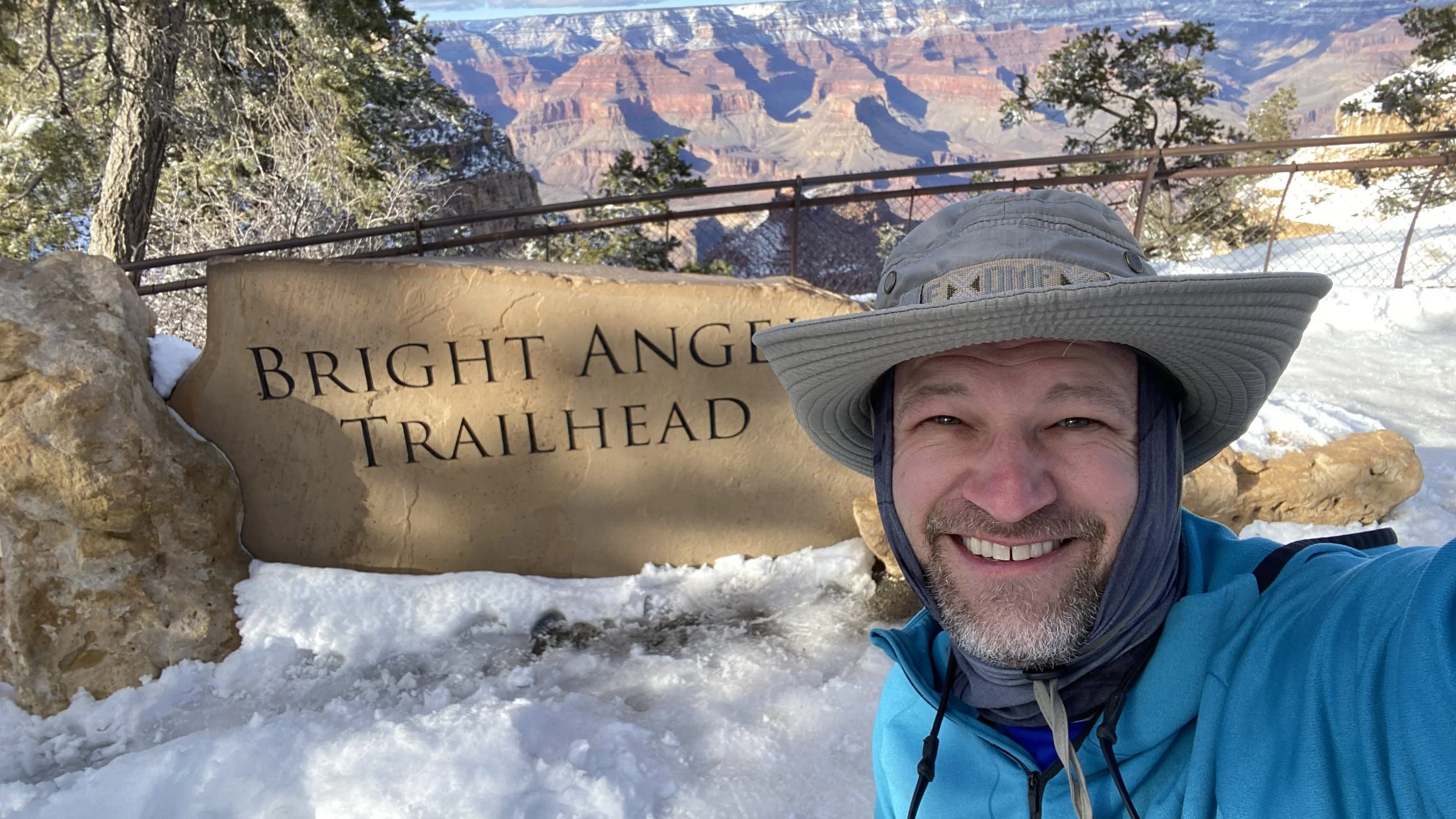
At the start.
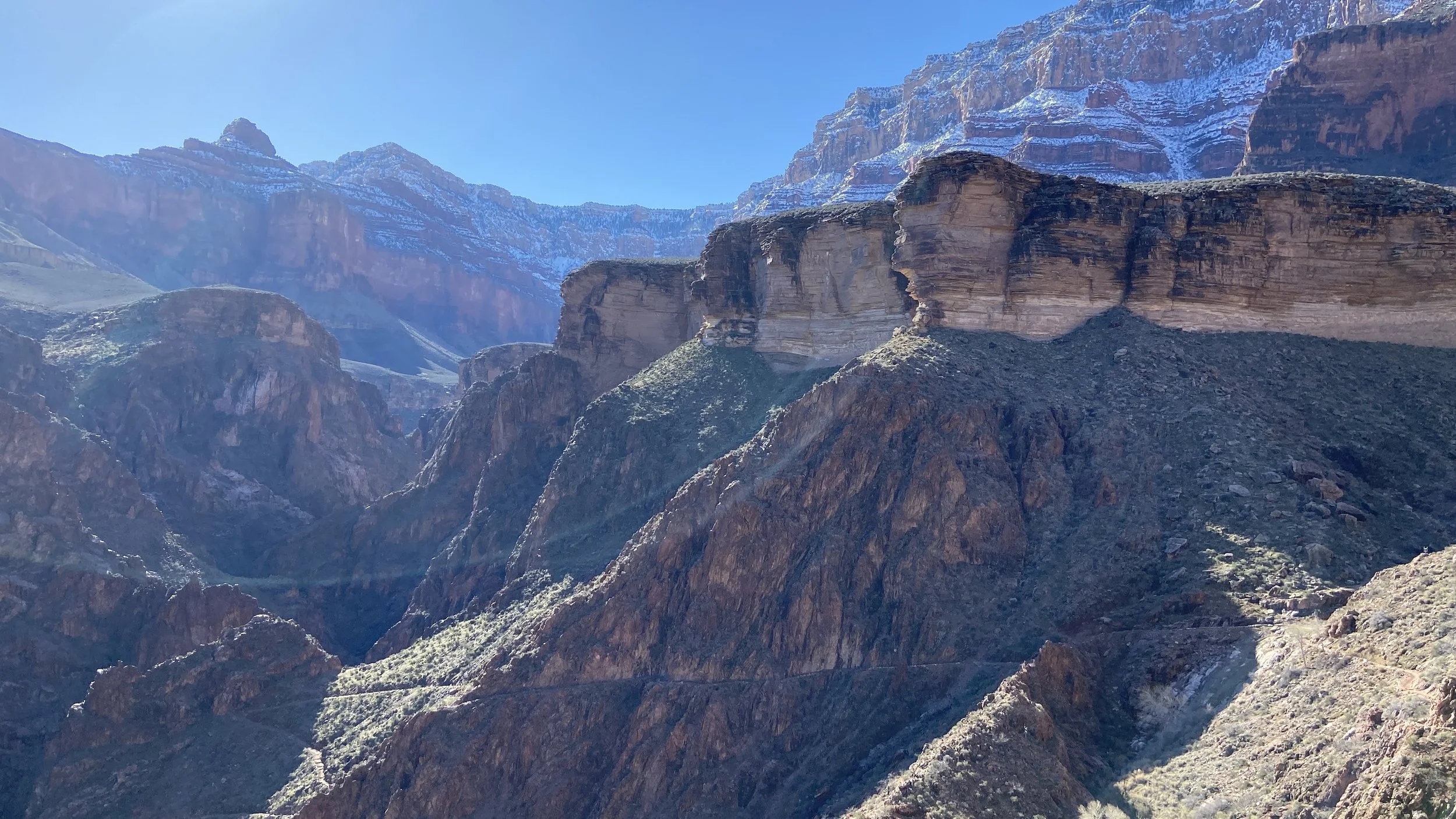
Descending Bright Angel is to move through a living cross-section of the earth. Every 30 minutes felt like a new chapter. The scrubby pines and snowy rim grasses gave way to exposed, layered cliffs. The air warmed a degree or two with each switchback. The geology was relentless in its storytelling, banded rock, sudden alcoves, terraces and benches that looked hand-hewn. As the trail dropped, the sounds of the rim, cars, distant voices, fell away. By the time we reached the lower terraces, the canyon’s scale had swallowed the rim world entirely. We paused often. Sometimes the stops were for navigation or to check water and layers; often they were simple to watch the canyon rewrite itself. Light struck a wall and brought out colors that weren’t visible a half hour earlier. A side trail would reveal a small stream cutting through a pocket of green, running clear and cold. These side paths were quieter, gentler, and they felt like discoveries: narrow channels where water had done its slow work and riparian plants had taken hold. We followed a few of them, boots squelching through damp soil, hands reaching for wet roots. They made the descent feel intimate, less like traversing a famous landmark and more like passing through someone’s secret.
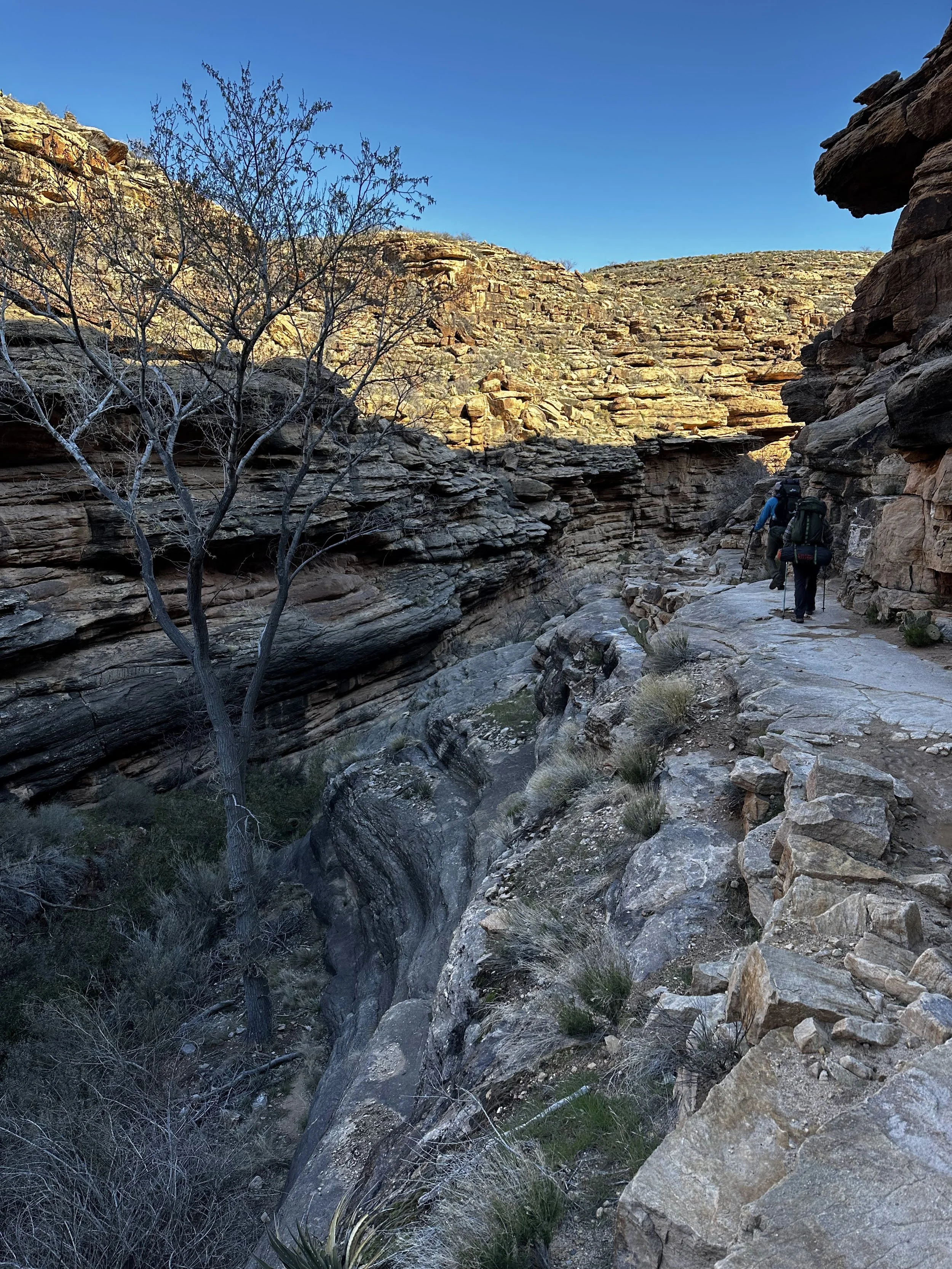
Side quest.
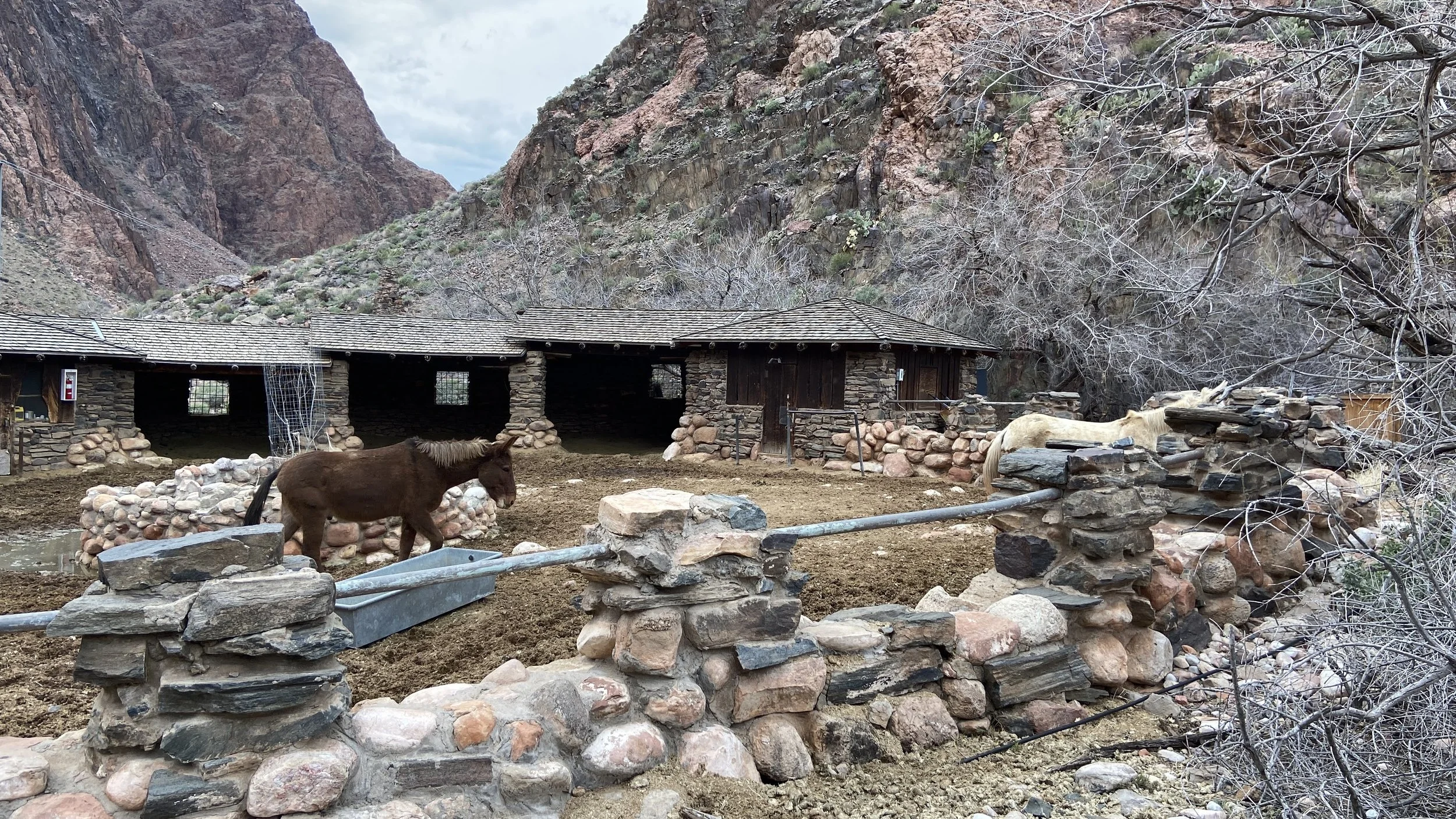
We spent two days exploring those side trails, wandering into washes and gullied slopes wherever a murmuring stream demanded attention. These small tributaries have their own microclimates. Even in a winter-heavy year, pockets of green persisted, willow, sedge, and moss sheltered in the shadiest cuts. Water had traced its slow architecture into softer rock, and those cuts offered cool air, insect song, and tiny waterfalls in miniature. We often joked as we went, largely about the kinds of small, improbable things friends joke about on a long trek, but the laughter felt like another way of honoring the place. Humor and awe coexisted easily in those long miles. We planned to camp near Phantom Ranch. The choice felt deliberate and fine: close enough to the river to hear it at night, far enough from the more crowded rim to sleep without the din of the tourist trail. Phantom Ranch itself sits like a small, hospitable island in the canyon, rangers and mule wranglers, a few bakers and mule-packing stories, but we bypassed the busier comforts. The canyon’s calling that night was simple: a small camp, a shared stove, and food that warmed from the inside out.
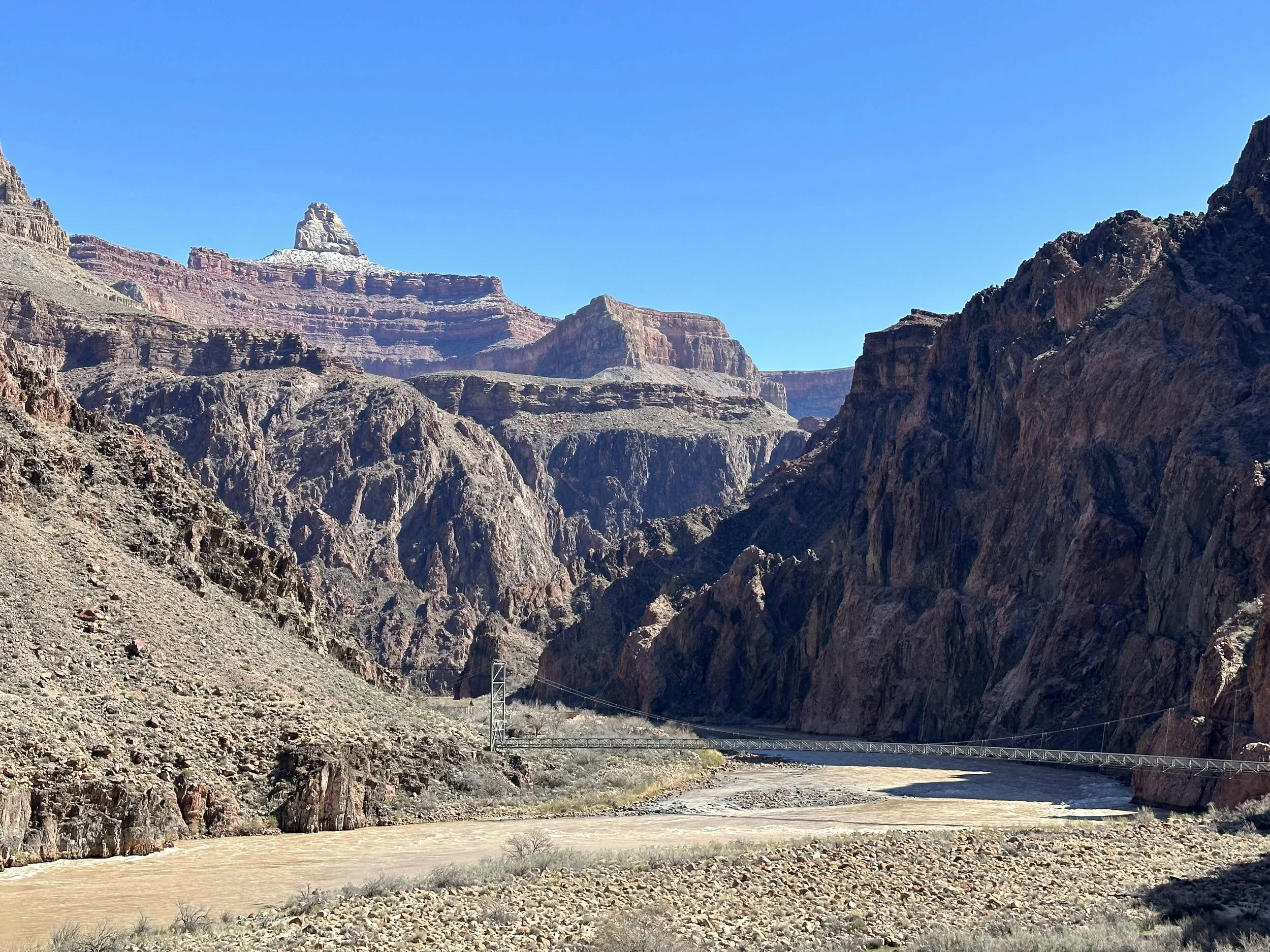
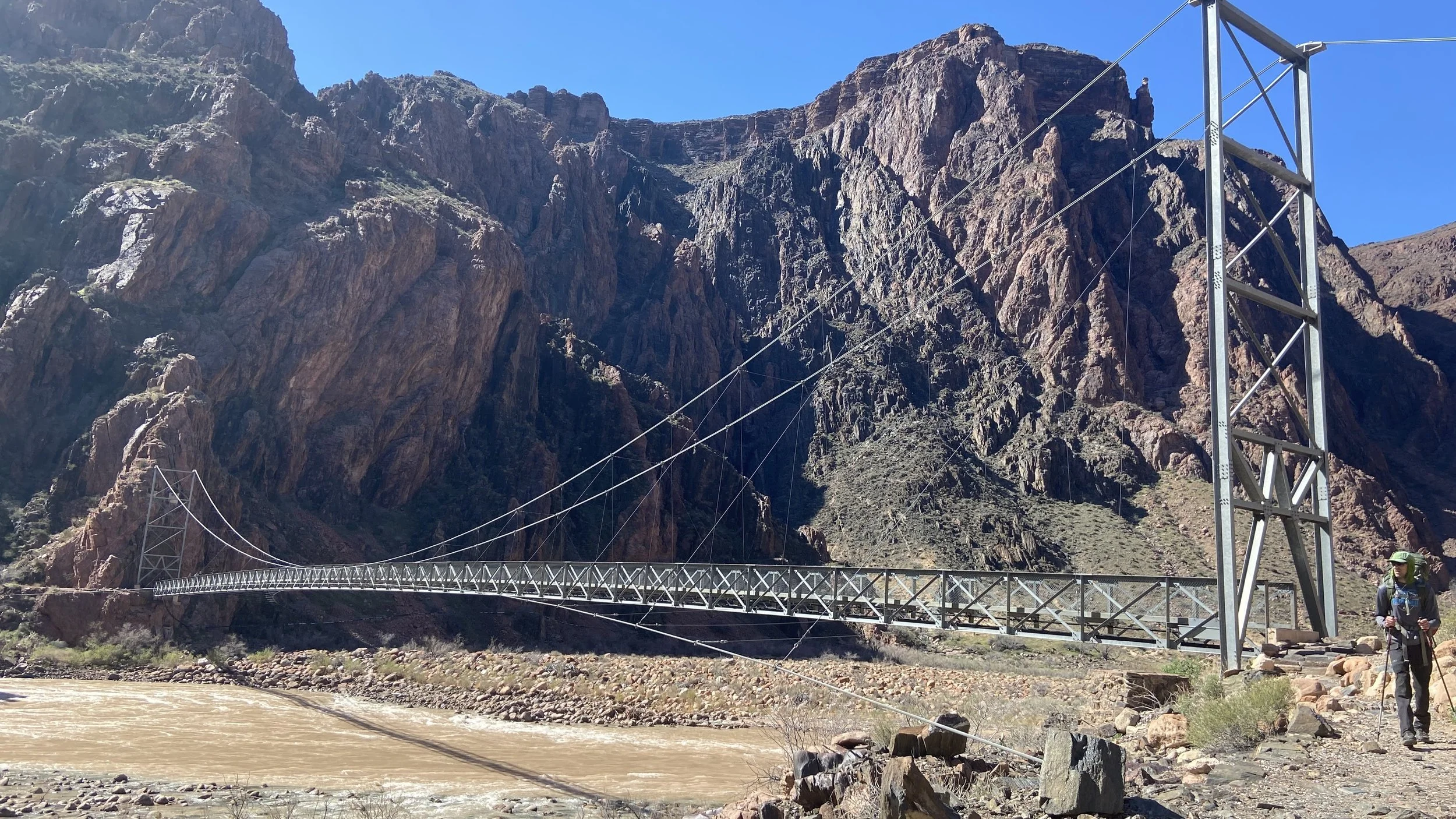
We skipped the lemonade and steak dinners offered at the ranch. Instead, we carried and cooked dehydrated chili. After a full day of hiking, that chili was joy, salty, spicy, rehydrated into something hearty and substantial. There’s an odd delight in eating something you packed and prepared yourself at the end of a long day: each bite feels earned. We ate by headlamp, feet tired, breath visible in the cold air that pooled in the canyon’s nooks. Above us, stars broke through with a clarity that the rim rarely offers; the canyon’s diurnal silence made the night feel wide and sacred. During our time along the canyon floor, we spent a long stretch right at the banks of the Colorado River. The river is less a body of water in the canyon and more an organizing presence, a line that has carved an entire world. Standing at the banks, the sound of the river is immediate and persistent: the rush and gurgle, the steady movement that seems to speak of time in another register. We sat there, boots damp from the river’s spray, letting the view and the noise simplify thinking. The river’s scale humbled us and steadied us at once. It is easy to imagine that the canyon is a place of conquest or checklist; standing beside the Colorado reveres it differently. It’s work to be quiet and listen.
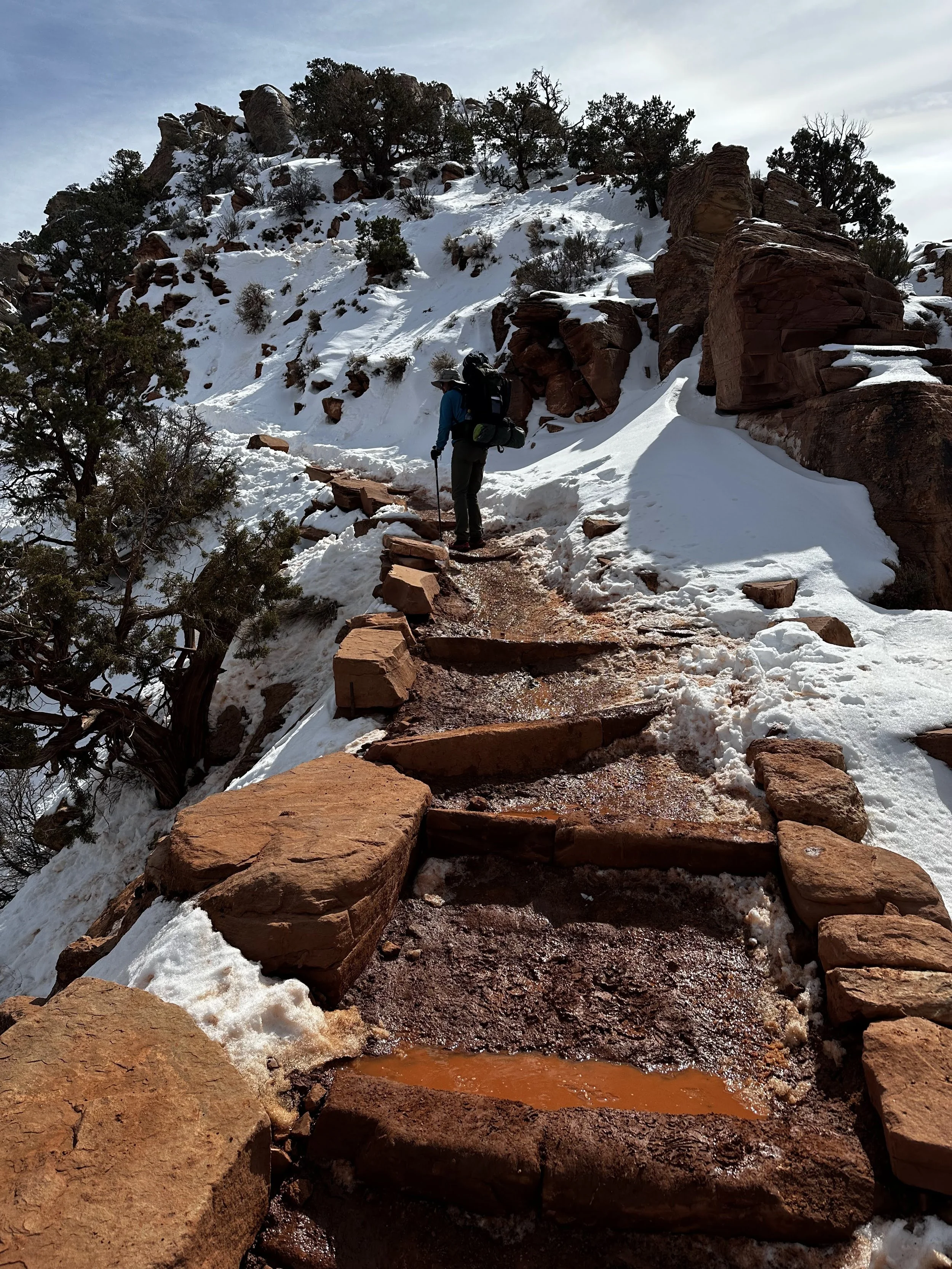
Muddy ascent.
The climb out was on the North Kaibab Trail. After our time down in the depths, the return had a different cadence. The body remembers the descent as a single extended event; climbing feels episodic, one gear and one footfall at a time. The ascent demanded focus on the immediate steps ahead, yet every turn opened up sweeping backward glances into the vast expanse of rock and shadow. As the switchbacks cut upward through the Coconino sandstone, the temperature dropped and winter reclaimed the landscape. Cresting the rim brought a sudden return to the quiet snow and cold air where the journey began in March 2023, carrying out a profound appreciation for every layer of time written into the canyon walls.