
Clothing
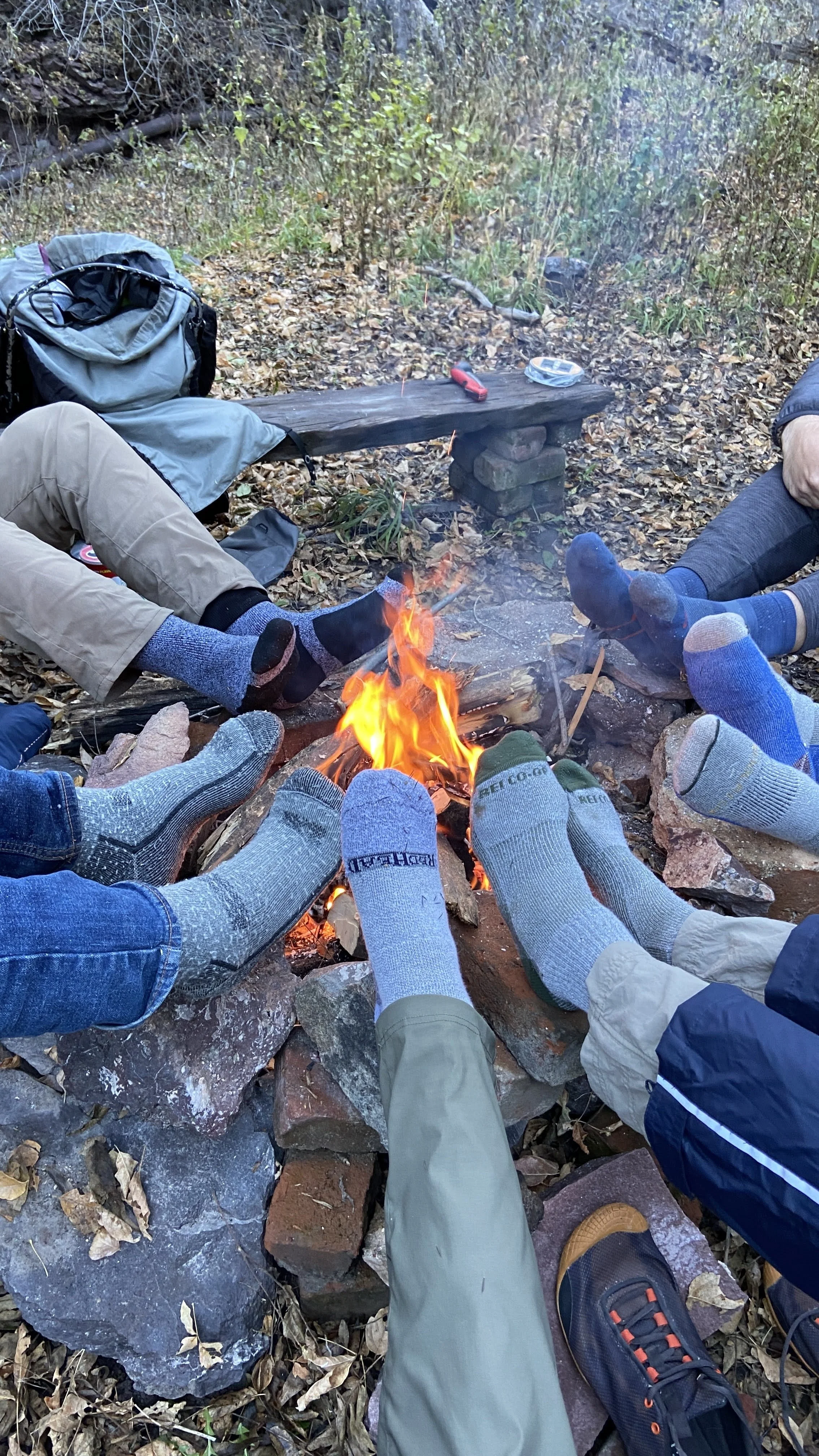
Darn Tough Wool Hiking Socks — The last sock you’ll need
Why they’re worth it:
Merino wool breathes, wicks moisture, and resists odor: key for multi-day wear.
Extremely durable with lifetime warranties; they outlast cheaper socks by seasons.
Proper cushioning and arch support reduce hotspots and blister risk.
What to look for:
Cushion level that matches your shoe volume and trail type (light, medium, or heavy).
Height (crew vs. over-the-calf) depending on pant/shoe combos and brush protection. Best for: Anyone serious about preventing blisters and keeping feet comfortable long-term.
Putting the kit together: my approach
Fit and comfort first. If something chafes or pinches, it will distract you and your group.
Breathability and sun protection in hot climates; layering and durability in colder or rockier terrain.
Simplicity. Minimal, reliable gear reduces decisions and helps keep attention on the retreat’s intention.
Final notes on buying
Try shoes and socks together: socks dramatically change fit.
Consider returning or exchanging items if fit feels off after a short walk—proper fit matters more than brand or price.
Investing a bit more in socks and shoes pays off in comfort and fewer foot issues on the trail.
Gear That Keeps You Present on the Trail: My Lightweight Essentials for Wilderness Adventures
Heading into the desert or high country with a group means balancing comfort, simplicity, and reliability. Over years of leading wilderness retreats for men, I’ve narrowed my kit to a few key items that keep me focused on the work at hand—listening, guiding, and being present—rather than fussing with blisters, overheating, or gear failures. Below are the pieces I reach for again and again. I’ve included why each matters and what to look for when you buy.
I use affiliate links for these items—purchases through those links help support the retreats at no extra cost to you.
Altra Lone Peak 8 — Trail shoes that prioritize comfort and natural stride
Why I choose them:
Foot-shaped toe box reduces cramped toes on multi-mile day hikes and long downhills.
Zero-drop platform promotes a more natural gait, which can ease hip and lower-back tension when you’re on rugged trails.
Durable midsole and sticky rubber outsole handle desert rock and slick scree surprisingly well.
I prefer the non-waterproof version, as it makes me more present on trail, not afraid of getting my shoes wet. The shoes dry quickly.
Lone Peak 9 is out now.
What to look for:
Proper fit in the toe box—there should be wiggle room.
If you’re new to zero-drop, ease in gradually to avoid calf strain. Best for: Hikers who want a roomy, natural-feel shoe that performs on mixed terrain.
REI Sahara Sun Hoodie — Lightweight sun protection and breathability
Why I pick this hoodie:
Breathable, quick-drying fabric that blocks sun without trapping heat.
Hood and long sleeves make it easy to manage sun exposure on long, exposed approaches.
Simple, functional design that layers well and packs small.
What to look for:
UPF rating and ventilation features (underarm mesh, back vents).
Fit that allows layering but still breathes when you’re moving. Best for: Hot, sunny environments where shade is sparse and sun protection is essential.
Goodr Sunglasses — Simple, no-slip shades that actually stay put
Why they’re in my pack:
Lightweight, snug fit that resists sliding when you sweat.
Polarized options reduce glare and keep eyes comfortable during long vistas or creek crossings.
Affordable and rugged enough to not worry about being in the field. One catch: the reflective coating on some of the models will come off when wet. Not pool friendly!
What to look for:
Polarization if you want reduced glare.
Fit profile that matches your face—Goodr offers different shapes. Best for: Hikers who want inexpensive, effective sunglasses that won’t bounce on trails.
Costco Hiking Pants — Practical, budget-friendly performance
Why I wear them:
Comfortable, flexible fabric that handles scrub, brush, and steep climbs without binding.
Many options from Costco balance durability and affordability—great for leaders who go through gear quickly.
Some styles pack down small and dry quickly, useful for minimal packs.
What to look for:
Articulated knee or stretch fabric for unrestricted movement.
Reinforced seat or knees if you sit on rough ground often. Best for: Cost-conscious hikers who want functional, no-fuss pants that can take a beating.